
Reduce Technical Risk. Keep Your Medical Device Program Moving.
RSE helps medical device teams identify system-level risks early, make better technical decisions, and build the engineering foundation needed to reach critical development milestones with fewer costly surprises.
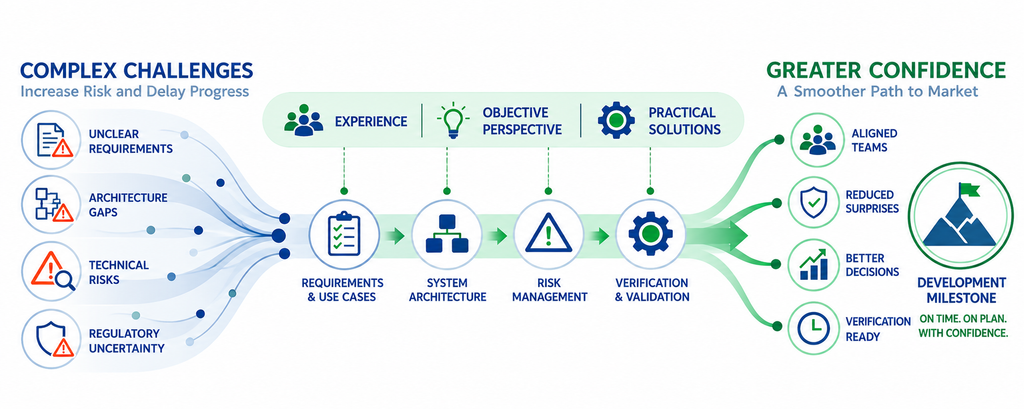
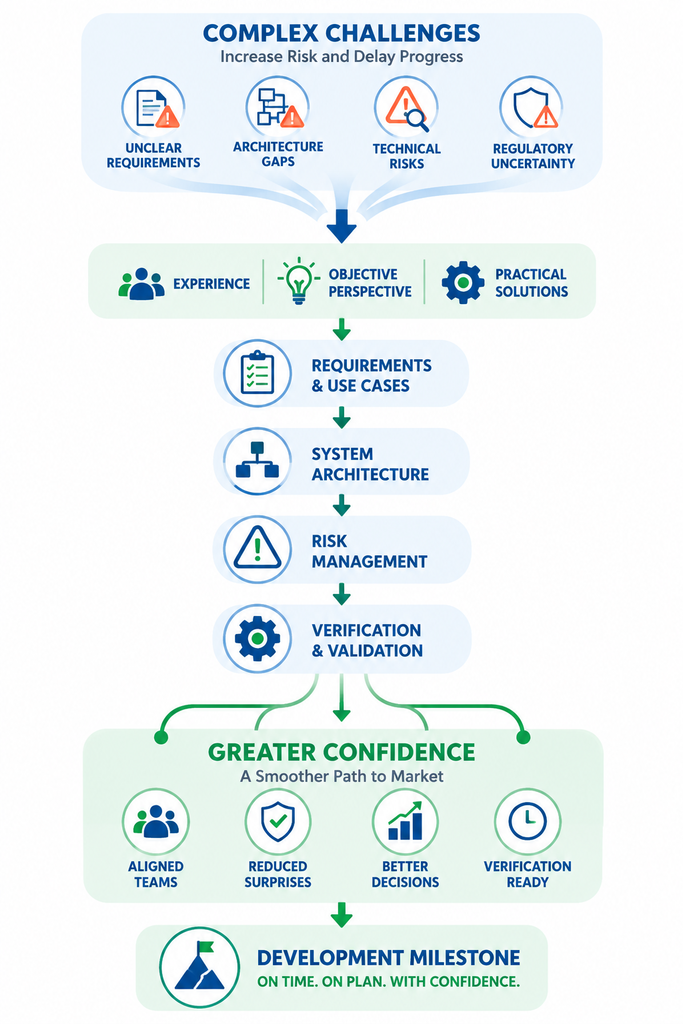
From early requirements and architecture through risk management and verification planning, RSE brings clarity and discipline to complex device development.
Where Technical Risk Becomes Business Risk
Medical device programs rarely get into trouble because of a single engineering mistake. More often, technical uncertainty accumulates — unclear requirements, unresolved interfaces, architectural gaps, or risks discovered too late. What begins as an engineering issue can quickly become schedule delays, costly redesign, verification problems, or regulatory risk.
Unclear Requirements
Ambiguous or incomplete requirements create different interpretations of what the product must do, driving rework and difficult decisions later in development.
Architecture Gaps
Unresolved interfaces and architectural decisions can create integration problems that surface only after significant development work is complete.
Technical Risk
Unresolved technical risks can drive late design changes, failed verification, and unexpected development effort.
Business Impact
Late technical surprises can become schedule delays, costly redesign, funding pressure, or regulatory setbacks that threaten the program’s next milestone.
How RSE Reduces Technical Risk
RSE brings a system-level perspective to medical device development — connecting user needs, requirements, architecture, risk, and verification so that important technical decisions are made deliberately rather than discovered through costly iteration.
Bring Clarity to the System
RSE helps teams turn user needs and product goals into a coherent system definition — establishing clear requirements, interfaces, architecture, and technical priorities that give engineering teams a common foundation for development.
Expose Risk Earlier
RSE examines how requirements, interfaces, architecture, and technical decisions interact — helping teams identify gaps, assumptions, and risks while there is still time to address them without major disruption.
Systems Engineering Expertise Where You Need It
RSE can support a specific engineering challenge or provide system-level leadership across a broader development effort. Engagements are tailored to the needs of the program, adding experienced systems engineering capability where it can have the greatest impact.
Requirements Engineering
Translate user needs and product goals into clear, testable system requirements that provide a reliable foundation for design and verification.
System Architecture
Define system boundaries, interfaces, functional allocation, and key architectural decisions so the pieces of the device work together as an integrated system.
Risk Management
Identify technical risks, assumptions, and failure modes early, and connect them to requirements, design decisions, and verification strategies before they become costly problems.
Verification & Validation Planning
Develop verification strategies that connect requirements to objective evidence, helping teams plan testing early and avoid verification surprises late in development.
Systems Integration
Bring hardware, software, fluidic, sensing, and other subsystems together by defining interfaces, resolving cross-functional issues, and maintaining a system-level view throughout development.
Technical Project Leadership
Provide experienced system-level technical leadership to align cross-functional teams, drive critical engineering decisions, and keep complex development efforts moving toward key program milestones.
How RSE Engages
Every medical device program has different needs. RSE can step into a focused technical challenge, support a critical phase of development, or provide ongoing system-level leadership as part of your existing team.
Focused Engineering Support
Bring RSE in to address a defined systems engineering need—such as requirements development, architecture, risk analysis, interface definition, or verification planning.
Development-Phase Support
Add experienced systems engineering capability during a critical phase of the program, helping the team resolve cross-functional issues, strengthen the system definition, and prepare for the next development milestone.
Fractional Systems Leadership
Provide ongoing system-level technical leadership when the program needs senior systems expertise but does not require—or is not ready for—a full-time systems engineering leader.
Experienced Systems Engineering Leadership
RSE is led by Glenn Sanders, a systems engineering leader with more than four decades of experience developing complex medical devices, electromechanical systems, and advanced aerospace systems. His experience spans system architecture, requirements, interfaces, risk management, verification strategy, fluidics, sensing, software-intensive systems, and cross-functional technical leadership.

Systems Thinking Built Through Real Development Programs
Glenn has spent his career working at the intersection of disciplines—helping engineering teams turn complex product goals into systems that can be designed, integrated, verified, and ultimately brought to market.
His experience includes medical device development as well as complex aerospace and robotic systems, providing a practical perspective on requirements, architecture, interfaces, technical risk, and the engineering decisions that shape successful development programs.
RSE was founded to make that senior systems engineering experience available to organizations that need additional technical leadership without necessarily adding a full-time role.
Building Better Medical Devices
RSE talks with medical device innovators and engineering leaders about the technical decisions, development challenges, and lessons that shape better medical devices.
Explore these conversations—and other RSE perspectives on systems engineering, technical risk, and medical device development—in Insights.